

Conflict and drought are making food insecurity across parts of Sudan’s Darfur and Kordofan even worse than they were before. In Eastern Jebel Marra, South Darfur, a survey of two camps for displaced people found acute malnutrition among children Hunger was severe and death rates were high. In North Darfur, 64 per cent of cropland is showing poor plant growth. Rains arrived in late September, too late to save most cereal crops, and cereal prices are very likely to keep rising. Greater Kordofan, the epicentre of Sudan’s Uncivil War, has seen more than 300,000 people forced from their homes since October 2025. Markets have been hit by more than 170 airstrikes, looting incidents or armed clashes this year as if this is the way military officers envisage military victory. In areas like Khartoum, Al Jazirah and Sennar states where violence has subsided – allowing humanitarian access and market recovery – food security has begun to improve. But in conflict-hit locations like Al Fasher and Kadugli that have been largely cut off from humanitarian assistance or are under siege, famine has now taken hold. The likelihood of continued anti-civilian armed conflict and a super-charged by climate-change El Niño is a killing pincer For the people of Darfur and Kordofan.
For the Trump-eters in the USA beef has huge symbolic value; masculinity and the frontier of cowboys but its price has risen steadily under the present Administration. Mark Zuckerberg tech oligarch is also the proud owner of a de luxe cattle herd
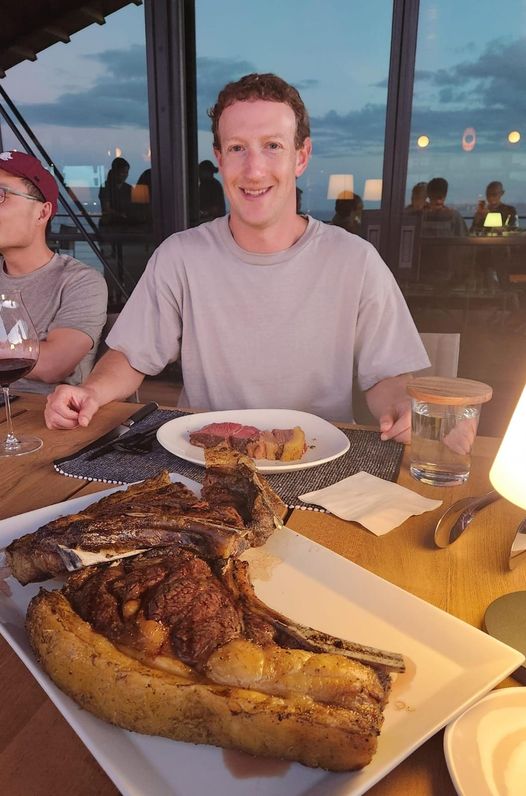
but it is insufficient, nor cheap enough for the MAKE AMERICA GREAT AGAIN section of the population. Cattle farmers have been complaining for several years about the power of the meat “packers” to lower the prices paid to them while the debt of US farmers in general is at record level and then become unmeasurable as they resort to. The reality is that the US cattle herd is at a multi-decade low. Things came out in the open when Tyson, one of the meat “packer”/distributor oligarchy closed its Illinois plant leaving 2500 workers jobless. The President’s gesture to “his base” that mirrors the stab-Ukraine-in-the-back diesel deal was to sign an executive decree that allows 300, 000 metric tonnes of beef to enter the USA duty-free for 90 days wit the requirement that they are sold at “25% below market price.” It is not expected to have much impact on this price.
Climate change turns temporary weather-related price jumps into a more persistent driver of inflation.. “Climateflation represents a permanent rise in everyday living costs driven by fossil fuel dependency and extreme weather destruction, locking in persistent inflation that strains household budgets worldwide,” as summed up the author of a Zero Carbon Analytics analysis of food price jumps over the last four years. , said in a statement. This year in addition the consequences of the Russian invasion of Ukraine and the US-Israeli attack on Ioran have upended critical trade corridors in the Mideast and the Black Sea, sending input costs, oil and fertiliser, soaring, while extreme weather has ravaged harvests and already begun to threaten the planting period for next year’s crop. A historically severe “super” El Niño, the severity climate-change caused will make the situation in 2027 worse. Prices of key crop staples, including wheat, corn, cocoa and sugar, have already climbed this year. Sugar offers an early glimpse of what may be in store for other crops, including rice, cocoa, coffee, and palm oil. At the start of the year the market faced a glut, but El Niño is powering a sharp reversal. India, the world’s No. 2 producer, is already contemplating export restrictions.